By admin | bakelite-catalin.com
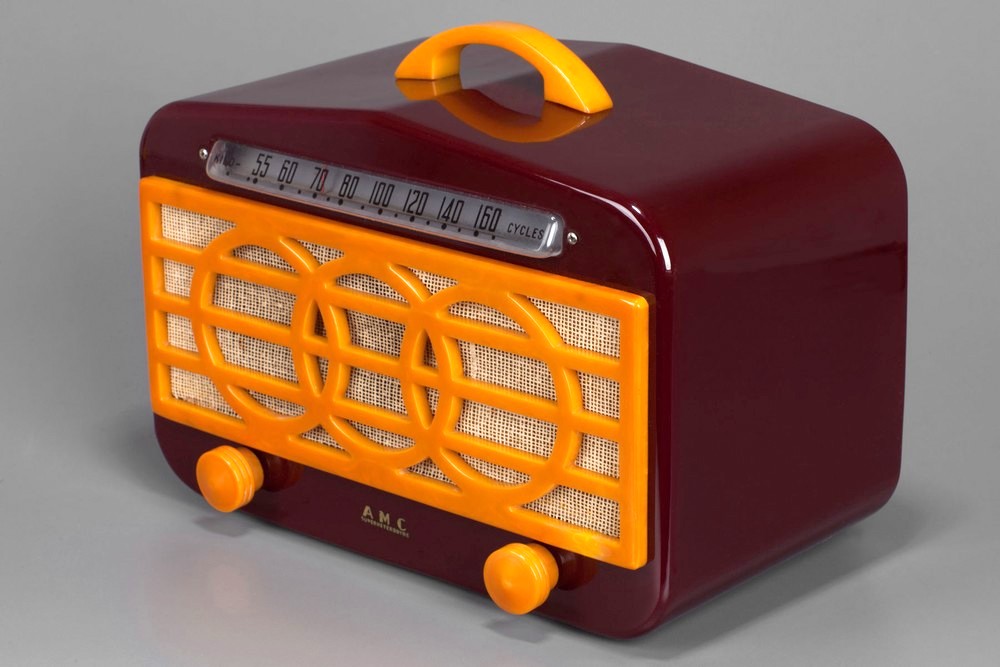
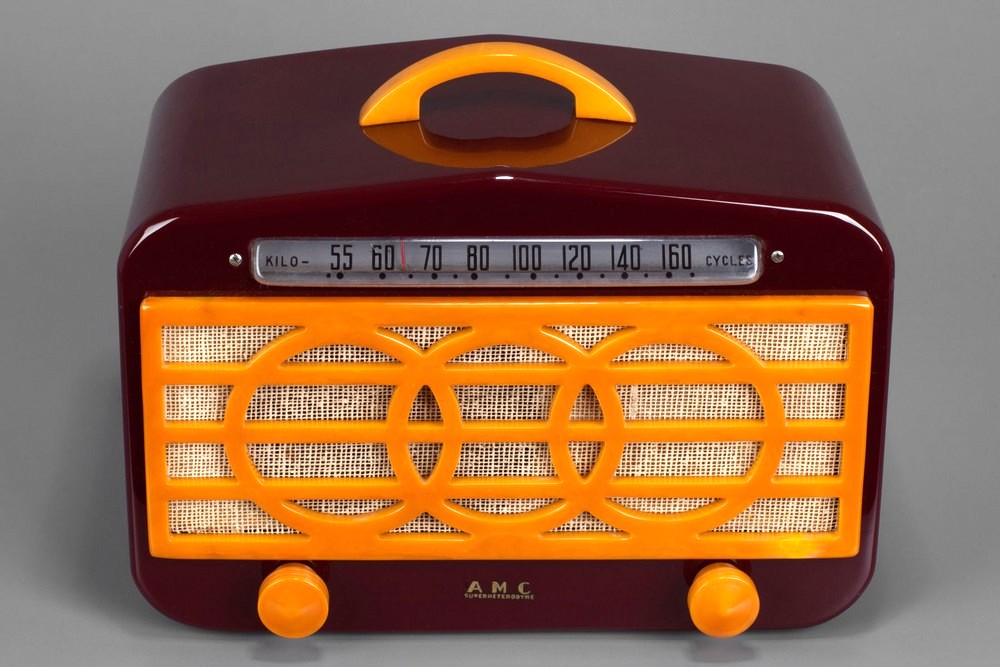
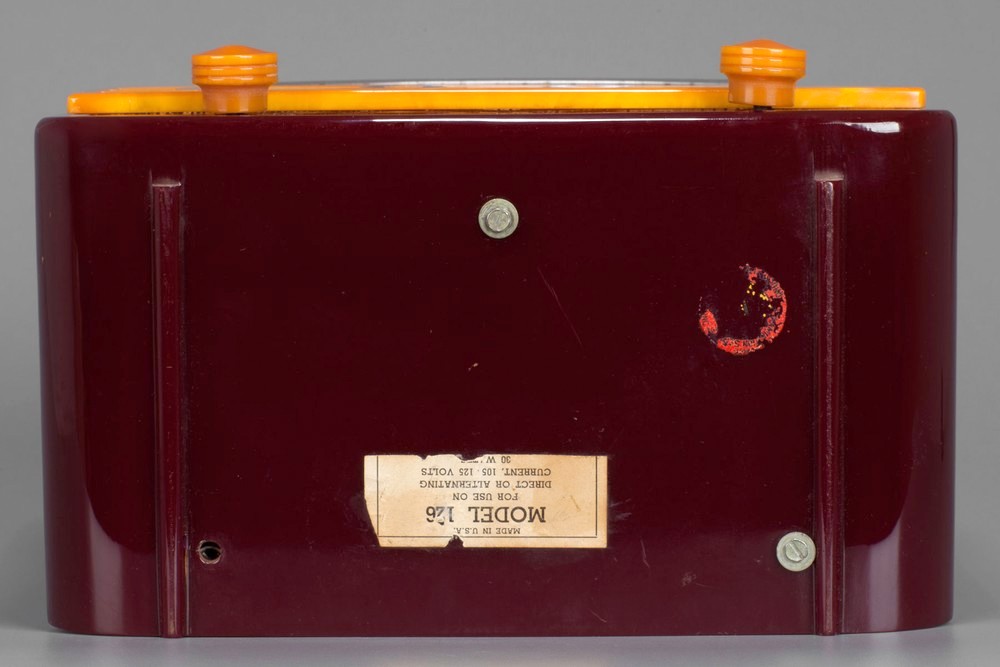
Something extraordinary happened at an auction house in April 2026. A 1940s AMC Model 126 “three-ring” radio in vibrant red and orange — estimated to sell between $3,000 and $4,200 — hammered down at $43,520. It wasn’t an anomaly. At the same sale, a lavender Air King Skyscraper fetched $41,600, and a marbleized tomato-red Emerson Cathedral sold for $23,040 despite missing its back panel and tubes.
Catalin radios have always been beloved. But right now, the market is reaching heights that even seasoned collectors didn’t see coming.
If you’ve ever wondered what makes these colorful Art Deco radios so desirable — or whether it might be time to start (or reassess) your own collection — this guide is for you.
What Makes a Catalin Radio Different?
To understand the frenzy, you first have to understand the material. Catalin Bakelite is a cast phenol-formaldehyde resin developed in 1927 by the American Catalin Corporation. Unlike standard Bakelite — which was dark, opaque, and limited to blacks and browns — Catalin was cast pure, without fillers. This allowed manufacturers to achieve something unprecedented: radios in jewel-toned reds, deep greens, cobalt blues, creamy butterscotch, and dramatic swirled marbling.
When you look at a Catalin radio, you’re not just looking at a vintage appliance. You’re looking at a sculpture — a product of the Art Deco era’s obsession with color, streamlined form, and the idea that everyday objects could be beautiful.
The material’s unique casting process also means that no two Catalin radios are identical. Color variations occurred naturally as dyes dispersed unevenly through the liquid resin. Over decades, oxidation has deepened and shifted those colors further, making each surviving piece genuinely one of a kind.
The Icons: Models Every Collector Should Know
Not all Catalin radios are created equal. Certain models have become legendary in the collecting world, and knowing them is essential.
FADA Bullet (Model 115 & Model 1000) Produced from 1940 onward, the FADA Bullet is arguably the most iconic Catalin radio ever made. Its streamlined, aerodynamic shape — like something designed for flight — paired with vibrant two-tone color combinations (red and yellow, blue with contrasting knobs, butterscotch and green) made it an instant classic. A blue Bullet with red and yellow accents sold for $5,632 in 2025. Rarer color combinations command significantly more.
Air King Skyscraper (Model 52) Designed by Harold Van Doren and John Gordon Rideout in 1933, the Skyscraper looks exactly like its name suggests — a stepped Art Deco building rendered in plastic. Most were made in Bakelite or Plaskon, but the rare Catalin examples are among the most prized objects in the entire field of vintage design. The April 2026 sales of lavender ($41,600) and mint green ($28,800) examples — both from the legendary Goodman Espy collection — set a new benchmark for what the rarest examples can achieve.
Emerson Cathedral/Tombstone (AU-190) Produced from 1936 to 1938, the Emerson AU-190’s Gothic arch profile is instantly recognizable. It came in several marbled colorways, with emerald green and red being the rarest. Even an example with an open back and missing tubes brought $23,040 at auction in April 2026.
Sparton Cloisonné (Model 500C) Designed by Walter Dorwin Teague — one of America’s most celebrated industrial designers — the Sparton Cloisonné is the only vintage radio to combine Catalin, enamel, and chrome in a single cabinet. Produced in 1939 in blue, brown, red, and yellow enamel, it is considered a rare Art Deco masterpiece. A near-flawless blue example sold for $8,500 in 2025.
The Color Hierarchy: What Drives Value
If there’s one factor that separates a $500 radio from a $50,000 radio, it’s color. Collectors have developed a fairly clear hierarchy based on rarity and desirability.
Ultra-premium colors: True cobalt blue, deep emerald green, rich marbleized combinations of blue with ivory, and any color that has resisted significant oxidation. These command the highest premiums by far.
High-demand colors: Red, marbleized green, contrasting butterscotch and maroon combinations. These move quickly at auction and at antique shows.
Standard colors: Butterscotch (the most common, as white Catalin oxidizes to yellow over time), solid ivory, plain brown. Still desirable, but far more available.
The rarest of all: Lavender, true black Catalin, and unusual two-tone combinations that saw limited production runs. When these surface in good condition, records get broken.
Color is also complicated by oxidation. A radio’s color today may be quite different from when it left the factory. Pieces originally cast white are now butterscotch. Patriotic pieces once red, white, and blue are now red, yellow, and blue — the white having shifted completely. For collectors, this aging is part of the authenticity, not a flaw.
Condition: What to Look For (and What to Walk Away From)
Condition has always mattered in collecting, but with Catalin radios it’s particularly nuanced.
What to prioritize: Complete cabinets with all original parts. Original finish with natural patina rather than heavy polishing. Intact dial faces and working mechanisms (though most collectors value these primarily as display pieces). Absence of cracks, chips, or repairs — especially difficult on the thin plastic grilles and speaker covers.
The shrinkage problem: Catalin contracts as it ages, which means many cabinets have developed hairline cracks at stress points — around knobs, along edges, near the speaker cutout. Minor surface crazing is considered normal and acceptable. Structural cracks reduce value significantly but don’t necessarily disqualify a piece if it’s otherwise rare.
Restored vs. original: The collecting community is divided on restoration. A carefully polished cabinet that reveals buried color can be spectacular. But heavy sanding, repainting, or replacement parts are generally viewed negatively and should be disclosed by sellers.
Where the Market Is Heading
The April 2026 auction results weren’t a fluke — they reflect broader trends in the market for 20th-century design objects. As original Art Deco pieces become scarcer, the best examples are increasingly moving from private collectors to museums and serious institutional buyers, permanently removing them from circulation.
The Goodman Espy collection sales are a case in point. Espy spent decades quietly assembling what many considered the finest private collection of Catalin radios ever formed. When it came to market, the results rewrote the record books. Collections of that depth and quality simply don’t come along again.
For collectors at every level, the lesson is clear: the window to acquire significant pieces at reasonable prices is narrowing. Mid-tier examples in desirable colors — the $500 to $5,000 range — still offer genuine value and the joy of owning objects that are, in every meaningful sense, irreplaceable.
Getting Started: Practical Advice for New Collectors
Handle before you buy. Photographs rarely capture the true depth of Catalin color or reveal hairline cracks. Whenever possible, examine pieces in person.
Learn the models first. Spend time with reference materials and online archives before spending money. Knowing which models were produced in which colors tells you immediately whether a claimed “rare blue” example is plausible or suspicious.
Buy the best condition you can afford. In a market trending upward, quality holds its value. A spectacular example of a common model will often outperform a mediocre example of a rarer one.
Build relationships with reputable dealers. The best pieces in this field rarely make it to general auction — they change hands quietly among people who have spent years earning each other’s trust.
Document everything. Provenance — the history of who owned a piece and when — adds meaningful value, especially for significant examples. Keep records of purchases, correspondence with previous owners, and any auction documentation.
A Final Note
Catalin radios are not merely collectibles. They are some of the most remarkable industrial design objects ever produced — functional sculpture from an era when manufacturers believed that ordinary people deserved beautiful things in their homes. Every surviving example is a small miracle: a fragile object that has lasted nearly a century through moves, attics, garage sales, and the slow chemistry of oxidation.
The record prices of 2026 are a reflection of that reality finally becoming widely understood. These objects are rare, they are beautiful, and there will never be more of them.
Related reading on bakelite-catalin.com: How to Identify Authentic Catalin Bakelite | Catalin vs. Cherry Amber: Unraveling the Bakelite Mystery | The Colorful History of Catalin Bakelite