If you’ve ever wandered through an antique shop or scrolled through vintage listings online, you’ve likely seen it: a translucent, brightly colored material that glows when the light hits it just right. It looks like plastic, but it feels substantial, heavy, and undeniably old-school. This isn’t your average modern polymer; it’s likely Catalin, often referred to as the “gem of plastics.”
Emerging in the late 1920s as a colorful successor to the earlier, drabber Bakelite, Catalin brought a splash of Art Deco vibrancy to the Great Depression era. While traditional Bakelite was restricted to dark colors like black and brown due to its fillers, Catalin was cast as a pure resin. This allowed for a rainbow of colors—from marbleized yellows and greens to deep, rich reds.
Today, these items are highly coveted by collectors who appreciate their historical significance and aesthetic appeal. But what exactly was made from this fascinating material, and why was it so popular? Let’s take a journey back in time to explore the colorful world of Catalin.
What is Catalin Bakelite?
To understand what was made from Catalin, we first need to understand what it is. Catalin is a brand name for a thermosetting polymer, specifically a phenol formaldehyde resin. It was developed by the American Catalin Corporation in 1927. While it is chemically similar to Bakelite (invented by Leo Baekeland in 1907), the manufacturing process differed significantly.
The key difference lies in the fillers. Traditional Bakelite used fillers like wood flour or asbestos to strengthen the material, which made it durable but opaque and dark. Catalin, however, was cast in lead molds without these opaque fillers. This process allowed the material to be transparent, translucent, or opaque, and most importantly, it could be dyed in an endless variety of bright, swirling colors.
Key Properties
Catalin was marketed for its beauty. Its properties included:
- Vibrant Coloration: Unlike the somber tones of early plastics, Catalin could mimic jade, rose quartz, amber, and marble.
- Workability: Once cast, the material could be machined, carved, polished, and tumbled to a high gloss, allowing for intricate designs.
- Heat Resistance: Like its predecessor, it was resistant to heat and electricity, making it practical as well as pretty.
Common Items Made from Catalin Bakelite
Because it was marketed as a luxury material—more expensive to produce than standard molded plastics—Catalin was often used for items where appearance mattered. It added a touch of elegance to everyday objects.
Vintage Jewelry
Perhaps the most famous application of Catalin is in vintage jewelry. During the 1930s and 40s, “Bakelite jewelry” became a fashion staple, though much of what we call Bakelite today is actually Catalin.
Designers carved the material into chunky bangles, intricate brooches, and statement necklaces. You might find “end of day” pieces, where leftover colors were mixed together to create unique, multi-colored designs. Polka dots, geometric Art Deco shapes, and carved floral motifs were incredibly popular. Because the material mimicked gemstones, it allowed average consumers to accessorize with the look of luxury without the price tag of real jewels.
Kitchenware and Utensils
The kitchen was another place where Catalin shined. While the metal parts of utensils were standard, the handles were often made of bright, cheerful Catalin. You can find flatware sets with handles in apple juice yellow (which has often oxidized to a darker amber over time) or swirled cherry red.
Beyond silverware, Catalin was used for napkin rings, egg cups, and salt and pepper shakers. Its resistance to heat made it a safe choice for handles on toasters and coffee pots, adding a pop of color to the chrome appliances of the era.
Radio Casings
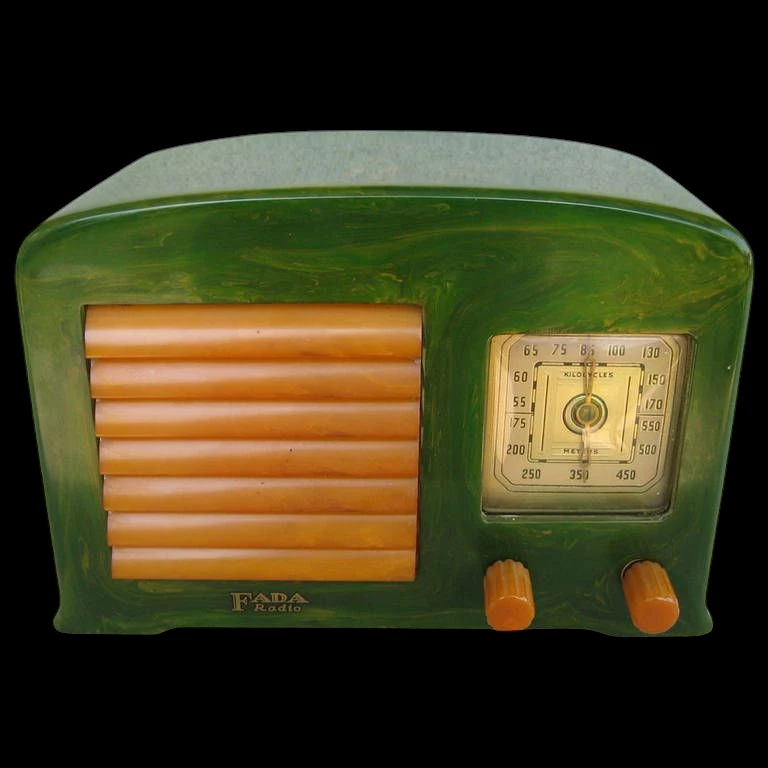
The most iconic industrial use of Catalin was in radio manufacturing. In the 1930s and 40s, the radio was the centerpiece of the living room. Manufacturers like Fada, Emerson, and Motorola used Catalin to create stunning, glowing cabinets.
These radios are masterpieces of industrial design. When the vacuum tubes inside heat up, the translucent Catalin cabinets glow, highlighting the swirling colors of the resin. Today, a pristine Catalin radio can fetch thousands of dollars at auction, prized for both its rarity (the material was brittle and prone to cracking) and its stunning Art Deco aesthetic.
Household Objects and Games
The versatility of the material meant it found its way into countless other household items. It was used to make:
- Game Pieces: Poker chips, dominoes, and Mahjong tiles were frequently made of Catalin. The “clack” sound of the tiles and the beautiful swirling colors made them a favorite among players.
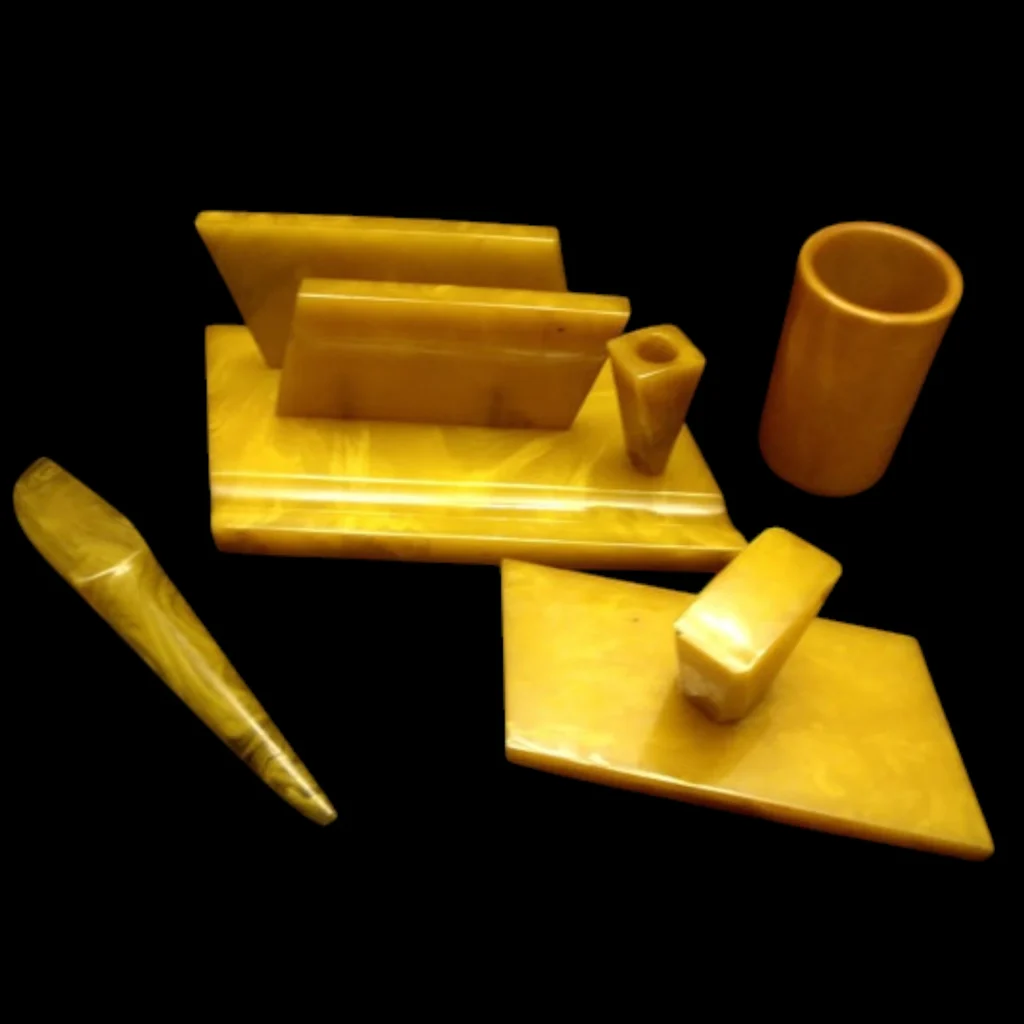
- Desk Sets: Inkwells, pen stands, and letter openers.
- Buttons and Knobs: From clothing buttons to the knobs on dashboard panels in vintage cars.
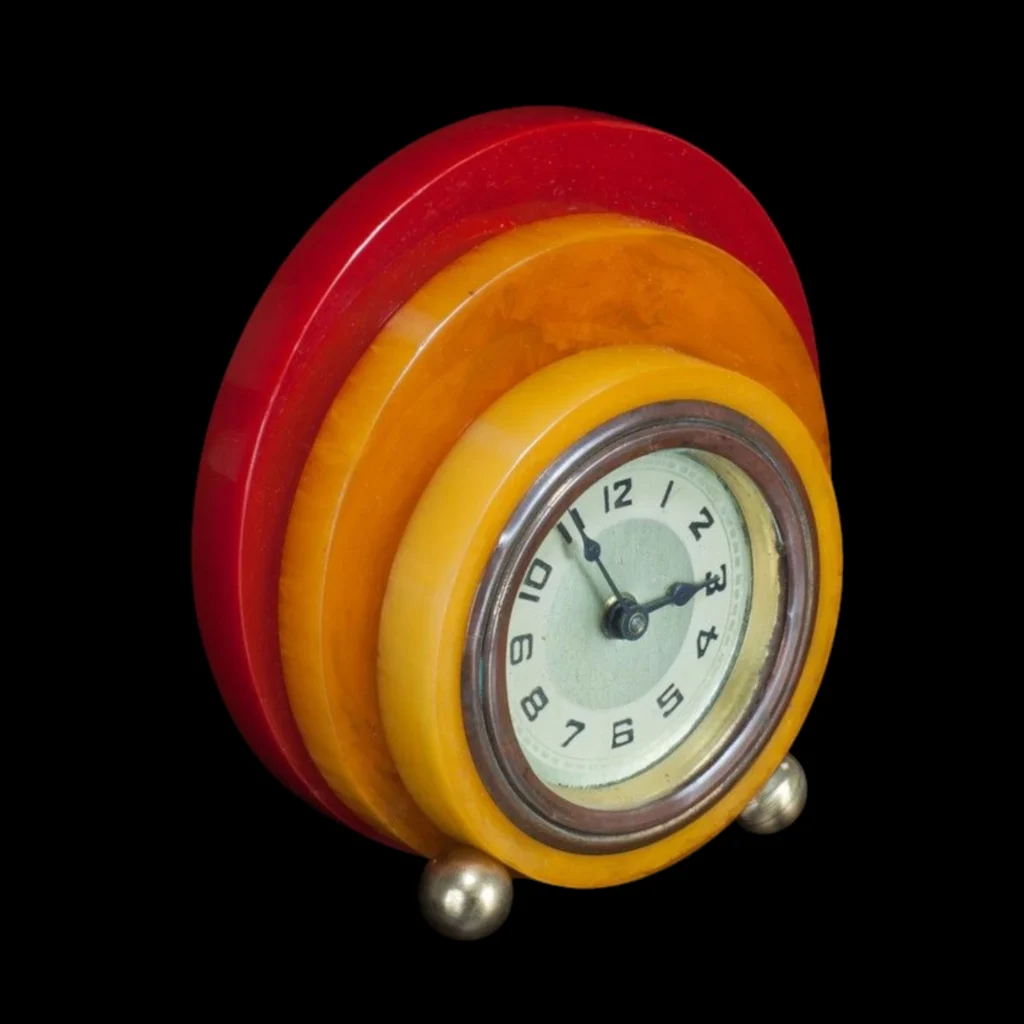
- Clock Cases: Similar to radios, Art Deco clocks often featured Catalin housing.
Why Catalin Bakelite Was Used
The popularity of Catalin wasn’t accidental; it was a direct response to the cultural climate of the time.
The Desire for Color
The 1930s were a difficult time economically. The Great Depression cast a shadow over daily life, and consumers were looking for affordable ways to brighten their surroundings. Catalin offered a psychological lift. Its bright, candy-like colors were optimistic and modern. It fit perfectly with the streamlining trends of Art Deco design, which emphasized sleek lines, modern materials, and visual appeal.
Moldability and Design Freedom
For designers, Catalin was a dream. It didn’t need to be molded into its final shape like traditional plastic. Instead, it was cast into tubes, rods, or sheets and then machined. This meant artisans could carve it like wood or stone. They could create undercuts, intricate floral patterns, and geometric facets that were impossible with compression-molded plastics. This allowed for a level of craftsmanship that elevated mass-produced items to near-art status.
Identifying and Caring for Catalin Bakelite
If you think you’ve found a piece of Catalin at a flea market, how can you be sure? And if you buy it, how do you keep it safe?
Identification Tests
Over time, Catalin oxidizes. A piece that was originally white might now look like butterscotch yellow; clear blue might look like dark green. Here are a few ways collectors test their finds:
- The Scent Test: Rub the item vigorously with your thumb until it gets warm. Genuine phenolic resin will release a distinct chemical smell, often described as formaldehyde or carbolic acid.
- Simichrome Polish: Use a small amount of pink metal polish (like Simichrome) on a cotton swab and rub a small, inconspicuous spot. If the swab turns yellow, it’s likely Catalin or Bakelite (the yellow is the oxidized patina coming off).
- Hot Water: Run the item under hot water for a few seconds and smell it. Like the friction test, this should release that distinct chemical odor.
Care and Storage
Catalin is durable, but it’s not invincible. In fact, it is inherently unstable and can shrink over time.
- Avoid Sunlight: Prolonged exposure to UV light causes the color to darken and the material to become brittle. Keep your collection out of direct windows.
- Temperature Control: Extreme temperature fluctuations can cause cracks, commonly known as “crazing.”
- Cleaning: Never use harsh chemicals or abrasive scrubbers. A soft cloth and mild soap are usually sufficient. If you polish it to remove the patina (the oxidized yellow layer), be aware that you are altering the vintage state of the piece, which some collectors advise against.
Preserving a Colorful Legacy
Catalin Bakelite represents a fascinating intersection of chemistry, design, and history. It was a material that brought color to a bleak economic era and allowed industrial designers to experiment with forms that are still celebrated today.
From the click of Mahjong tiles to the glow of a Fada radio, these objects tell the story of a specific moment in the 20th century. Whether you are a serious collector or just someone who appreciates the beauty of vintage design, owning a piece of Catalin is like holding a piece of history—solid, colorful, and enduring.
Do you have a family heirloom that you suspect might be Catalin? Or perhaps you’ve just started your own collection of vintage bangles? We’d love to hear about your finds and see how you display these colorful treasures.