If you have ever wandered through an antique shop or scrolled through listings for vintage jewelry, you have likely encountered a specific type of plastic that seems to glow from within. It catches the light with a depth that modern plastics just cannot replicate. These vibrant, candy-colored items—ranging from chunky bangles to Art Deco radios—are often labeled as Bakelite. However, true collectors know that the colorful, translucent material is actually its glamorous cousin: Catalin.
While both materials define the early era of synthetic plastics, Catalin holds a special place in design history. Known as the “Gem of Modern Industry,” this material brought a splash of color to the Great Depression and became a staple of Art Deco style. Its production process was labor-intensive, resulting in items that were polished, machined, and finished like jewelry rather than mass-molded like cheap toys.
Understanding the difference between standard Bakelite and Catalin is essential for anyone interested in vintage design. Whether you are looking to start a collection of vintage radios or simply inherited a box of interesting costume jewelry, knowing what you hold in your hands changes everything. This guide explores the history, science, and enduring appeal of this fascinating material.
The Colorful History of Catalin
To understand Catalin, we first have to look at its predecessor. In 1907, Leo Baekeland invented Bakelite, the world’s first fully synthetic plastic. It was durable, heat-resistant, and an excellent electrical insulator. However, it had a significant aesthetic limitation. Because Bakelite was strengthened with fillers like wood flour or asbestos, the resulting material was opaque and dark. It mostly appeared in black or dark brown.
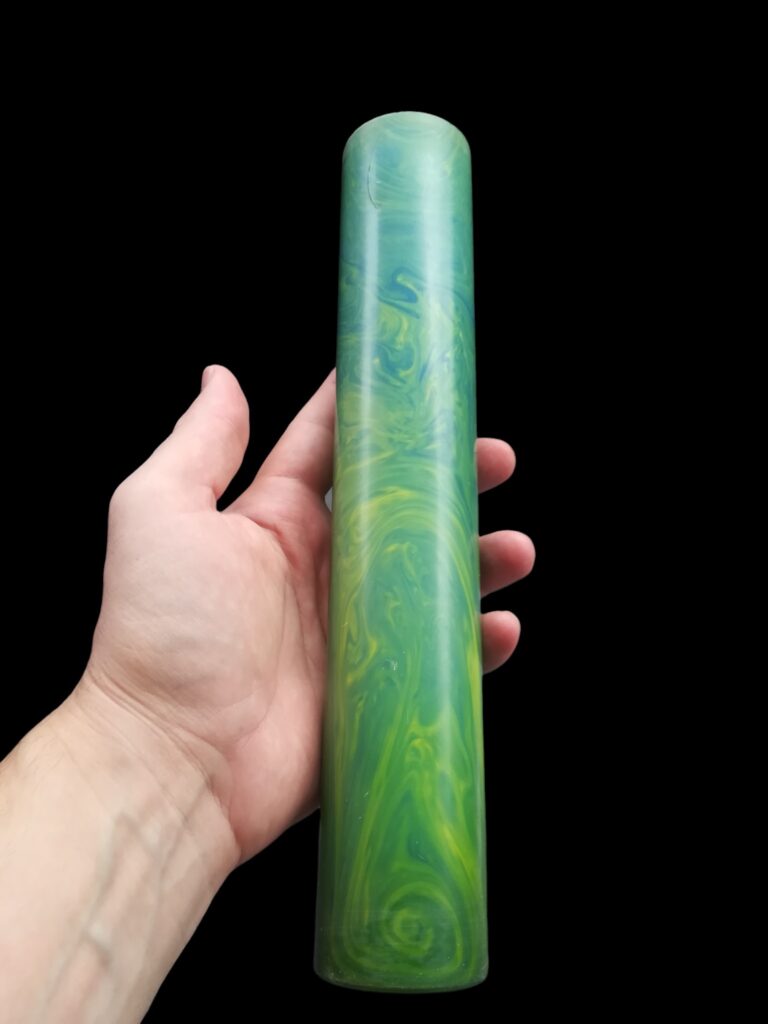
Fast forward to 1927. The American Catalin Corporation acquired the patent for a slightly different chemical formula. Like Bakelite, Catalin is a phenol formaldehyde resin. The key difference lies in the fillers. Catalin contains no opaque fillers. It is a cast resin, meaning it is poured into lead molds as a thick syrup and then cured in ovens for several days until hard.
This lack of dark fillers allowed manufacturers to add dyes to the clear resin base. Suddenly, the plastic world wasn’t just brown and black. It was bright yellow, intense red, marbleized green, and shimmering blue. It could be made translucent or even transparent.
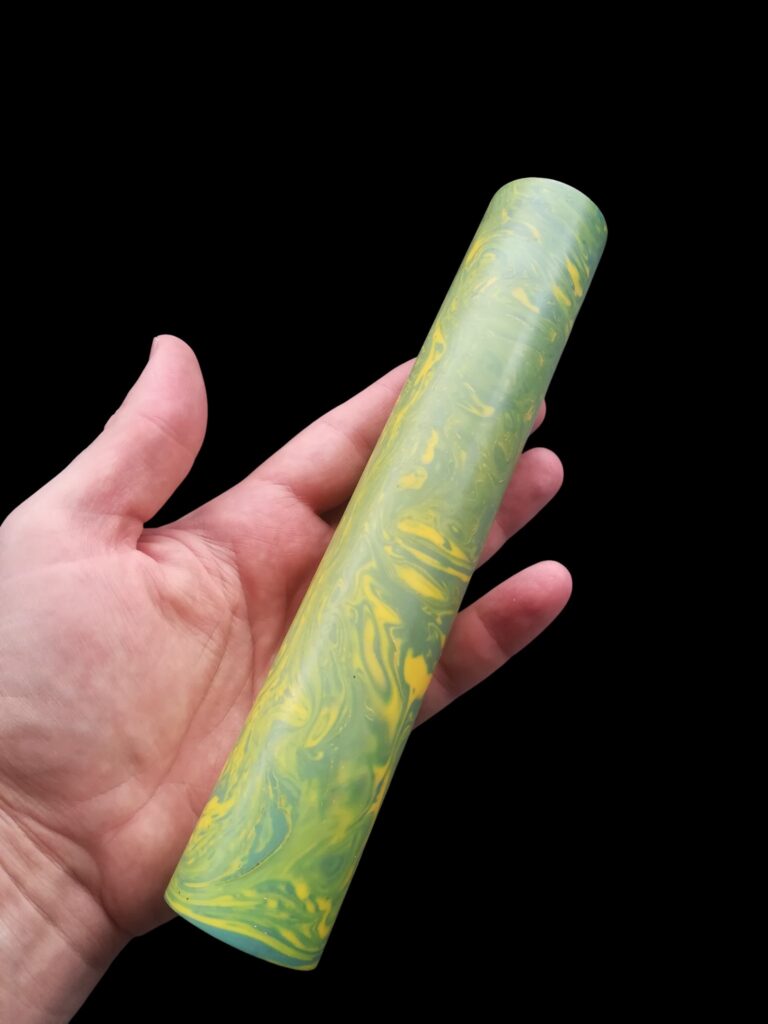
The production method also differed significantly. While Bakelite was molded under heat and pressure (creating a “seam” on the finished product), Catalin was cast in tubes or blocks. Once cured, these shapes were sliced, carved, polished, and tumbled by hand. This manufacturing process makes Catalin items feel more substantial and handcrafted than typical molded plastics.
Identifying Characteristics and the Aging Process
One of the most confusing aspects of collecting vintage plastics is that Catalin is chemically very similar to Bakelite, but it behaves differently over time. Over the decades, the environment changes the appearance of these pieces, creating a distinct “patina” that collectors either love or hate.
The Color Shift
Catalin is unstable when exposed to UV light. Over time, the phenolic resin oxidizes, causing a dramatic color shift. This is most noticeable in clear or white pieces.
- White turns into a deep yellow or “butterscotch.”
- Blue often turns into a murky green or teal.
- Clear transforms into a brownish-yellow, often referred to as “apple juice.”
- Purple can shift toward brown.
If you see a vintage bangle that is a bright, true white, it is likely not Catalin (or it has been heavily polished to remove the outer layer).
Translucency and Depth
Unlike the flat, opaque look of standard Bakelite, Catalin often has depth. If you hold a piece up to a light source, you will often see light passing through the thinner edges. This is especially true for the marbleized colors, where swirls of different dyes were mixed during the casting process. The material creates a warm glow that sets it apart from the cold, hard look of acrylic or Lucite.
No Mold Seams
Because Catalin was cast in lead forms and then machined, you will rarely find mold lines or seams on the finished product. A bracelet, for example, would have been sliced from a long cast tube and then polished smooth. If you feel a sharp raised line running along the side of a bangle, it is likely a modern molded plastic, not vintage Catalin.
How to Distinguish Real Catalin from Imitations
With the prices of vintage jewelry and radios rising, knowing how to spot the real deal is vital. Many sellers use “Bakelite” and “Catalin” interchangeably, or apply the labels to modern plastic to inflate the price. Here are three reliable ways to test your finds.
1. The Simichrome Polish Test
This is the gold standard for testing phenolic resins. Simichrome is a pink metal polish available at most hardware stores.
- Apply a tiny amount of the pink cream to a soft white cloth or a cotton swab.
- Rub it gently on an inconspicuous spot on the item (like the inside of a bracelet).
- If the pink cream turns yellow or brown, it tests positive for Bakelite Catalin.
- If the cream remains pink, it is likely Lucite, acrylic, or another modern plastic.
Note: This test works because the polish is removing a microscopic layer of the oxidized patina. If a piece has been freshly polished or restored, it might not test positive immediately.
2. The Hot Water Test
Heat releases the scent of the chemicals used to create the plastic.
- Run the item under hot tap water for roughly 15 to 30 seconds.
- Smell the item immediately.
- Catalin and Bakelite will smell strongly of formaldehyde, camphor, or chemicals (often described as an “old library” or “chemical” smell).
- Lucite and modern plastics will generally have no smell.
- Galalith (a milk-based plastic) will smell like burnt milk.
3. The Sound Test
This requires a bit of experience, but it is useful for a quick check in the field. When two pieces of Catalin are tapped together, they produce a deep, solid “clunk” sound. Modern plastics often produce a higher-pitched, hollow “clack.”
A warning on the “Hot Pin” test: You may read online advice suggesting you heat a pin and press it into the plastic. Do not do this. It will damage the item, leaving a permanent hole and a burn mark, effectively ruining its value. The non-invasive tests above are sufficient.
Collecting and Caring for Your Treasures
Collecting Catalin is a rewarding hobby because the material appears in so many interesting forms.
What to Look For
- Radios: The “Holy Grail” for many Catalin collectors. Brands like Fada, Addison, and Emerson produced stunning, small table radios in bright colors. A pristine Fada “Bullet” radio can fetch thousands of dollars.
- Jewelry: Chunky “clamper” bracelets, carved bangles, and geometric brooches are highly sought after.
- Household Items: You can find Catalin handles on vintage flatware, poker chips, napkin rings, and even pencil sharpeners.
Cleaning and Preservation
Preserving these items requires care. Phenolic resin is durable, but it can be brittle. If you drop a Catalin bracelet on a tile floor, it will likely shatter.
To clean your items, avoid harsh household cleaners or alcohol-based products, which can strip the finish or cause clouding. Instead, simply wipe them down with a soft, damp cloth. If they are very dirty, a mild dish soap and warm water will work, but dry them immediately. Do not soak jewelry, especially if it has metal hinges or embedded rhinestones, as water can loosen the glue or rust the metal components.
To Polish or Not to Polish?
This is a debate among collectors. Because the outer layer turns yellow due to oxidation, you can technically polish a “butterscotch” piece back to its original white using metal polish and elbow grease.
However, many collectors value the patina as a sign of age and authenticity. Stripping a piece back to its original color might make it look brand new, which can ironically make it look like a modern reproduction. Generally, it is best to leave the color as is and simply polish it enough to restore its shine.
A Lasting Legacy of Design
Catalin Bakelite represents a specific moment in history where industrial chemistry met high fashion. It was a material that allowed ordinary people to own objects of extraordinary beauty during difficult economic times.
Today, these objects serve as vibrant reminders of the Art Deco era. Whether it is the warm glow of an amber-colored radio dial or the satisfying weight of a carved bangle, Catalin offers a tactile connection to the past. As you browse antique stores or online auctions, keep an eye out for that distinctive, translucent glow. You might just find a gem hiding in plain sight.