For vintage jewelry enthusiasts and antique collectors, the word “Bakelite” sparks an immediate thrill. This early plastic, developed in the early 20th century, revolutionized manufacturing and design, appearing in everything from radios to bangles. But within the world of Bakelite collecting, terminology can get confusing. You might hear terms like “Catalin” and “Cherry Amber” thrown around, often interchangeably, though they refer to distinct variations of phenolic resin.
If you are just starting your collection or looking to appraise a specific piece, understanding the nuances between these materials is crucial. While both are chemically similar, their visual characteristics, manufacturing processes, and value on the vintage market differ significantly.
This guide explores the specific traits of Catalin and Cherry Amber Bakelite, helping you identify your treasures with confidence.

Understanding Catalin Bakelite
To understand Catalin, we first have to look at the history of phenolic resins. The original Bakelite, patented by Leo Baekeland in 1907, was a phenol-formaldehyde resin filled with wood flour or asbestos to make it durable and heat-resistant. It was purely utilitarian and usually dark in color—black or brown.
In the late 1920s, the American Catalin Corporation introduced a new variation. They removed the dark fillers, resulting in a clear, syrup-like resin that could be dyed in vibrant, translucent, and opaque colors. This was trademarked as Catalin.

Characteristics of Catalin
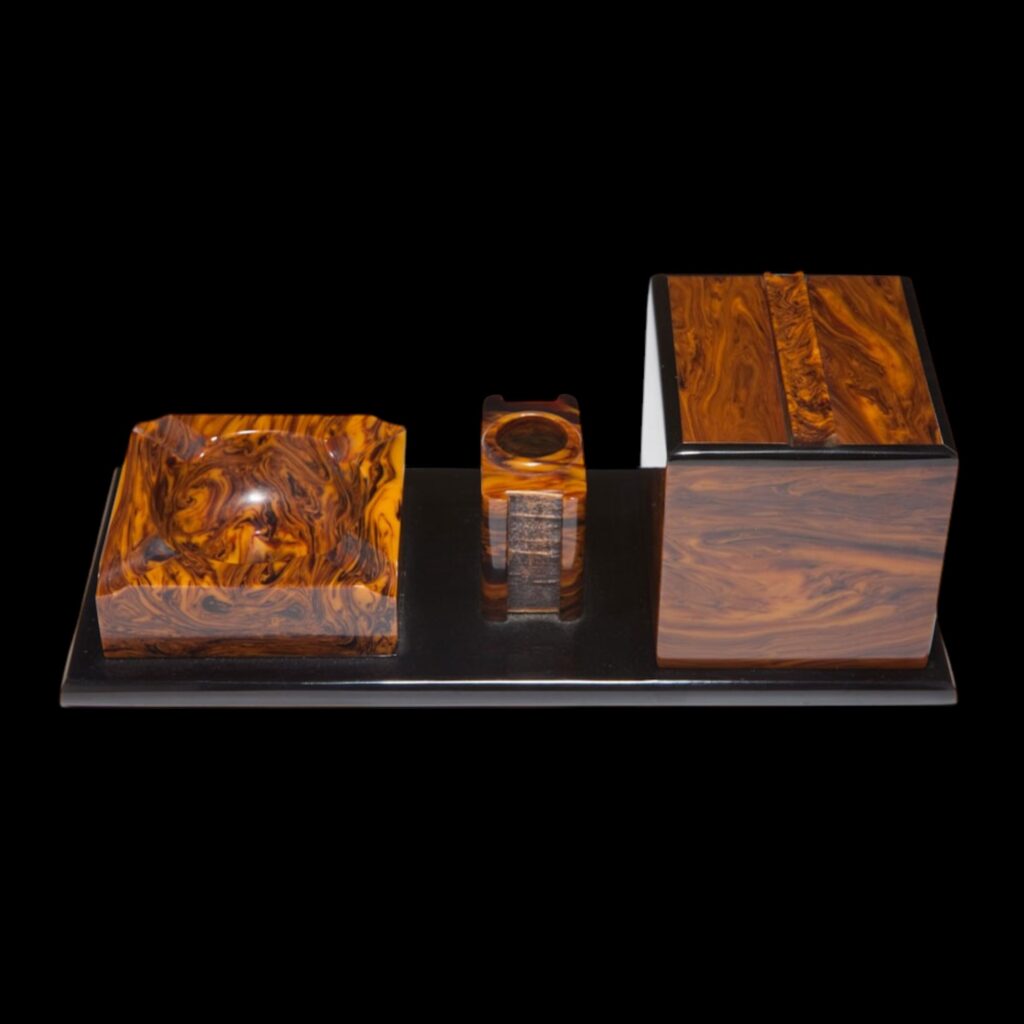
Catalin is famous for its gem-like qualities. Unlike the opaque, molded Bakelite used for telephones or electrical parts, Catalin was cast in lead molds and then cured in ovens. This casting process allowed for a brilliant range of colors, including bright yellows, greens, reds, and blues. Over time, many of these colors oxidize; for example, white Catalin often turns into a butterscotch yellow, and blue can morph into a deep green.
Visually, Catalin often has a depth to it. It can be solid, but many pieces feature swirls or marbling, mimicking natural stones like jade, turquoise, or marble.
Popular Catalin Collectibles
Because of its aesthetic appeal, Catalin became the darling of the Art Deco era. It was heavily used in:
- Jewelry: Chunky bangles, carved brooches, and beads.
- Radios: The famous “Fada” and “Addison” radios, which glow when backlit.
- Household Items: Napkin rings, poker chips, and handles for silverware or kitchen tools.
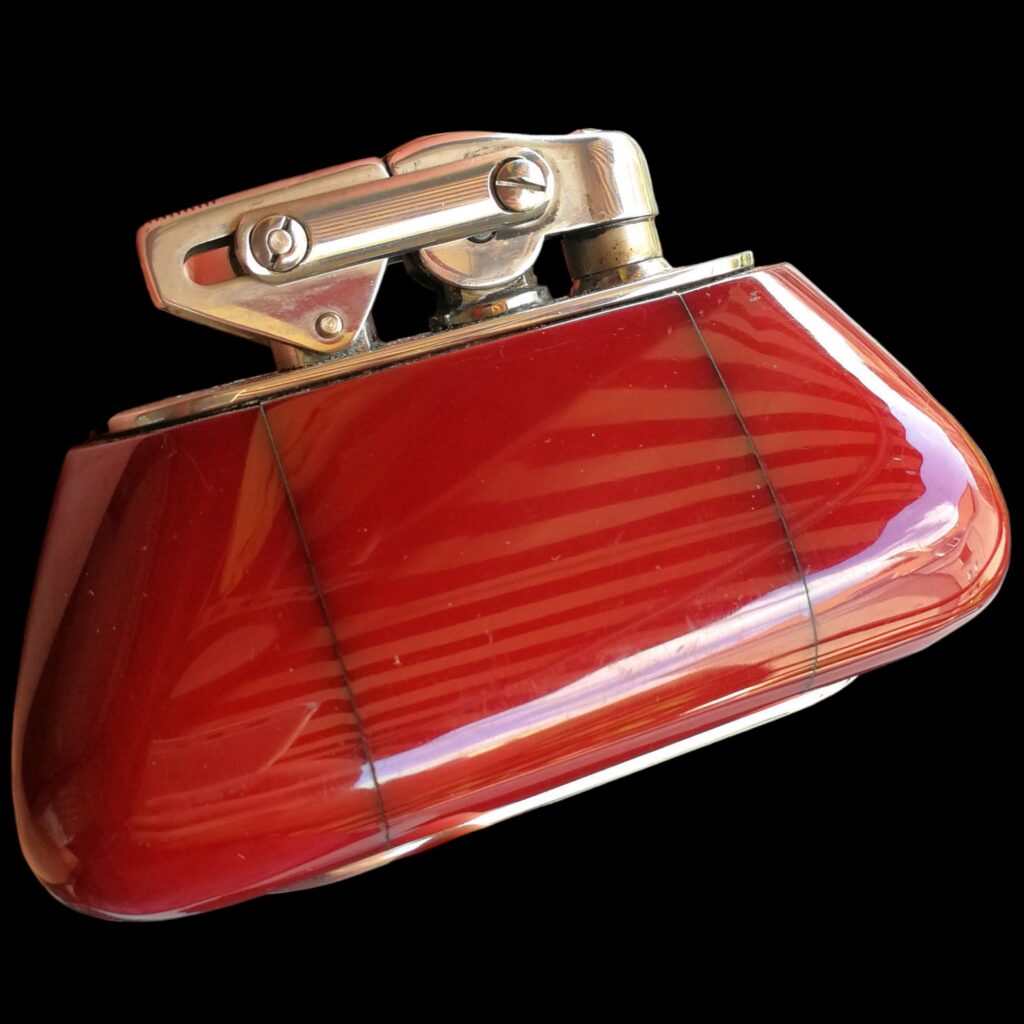
The Allure of Cherry Amber Bakelite
“Cherry Amber” is a term that causes quite a bit of debate in collecting circles. Technically, it is not a scientific brand name like Catalin. Instead, it is a descriptive collector’s term used to identify a specific type of translucent, deep red Bakelite (often Faturan or Catalin) that mimics the appearance of natural amber.
What Makes it “Cherry Amber”?
Natural amber is fossilized tree resin. Cherry Amber Bakelite is a synthetic phenolic resin designed to look like that fossilized resin but with a deep, rich red hue—like black cherry juice held up to the light.
The defining characteristic of Cherry Amber is its intense, glowing translucency. When light passes through it, the piece should exhibit a vibrant red or wine color. If the piece is opaque or brown when held to the light, it is likely standard Bakelite or a different material entirely.
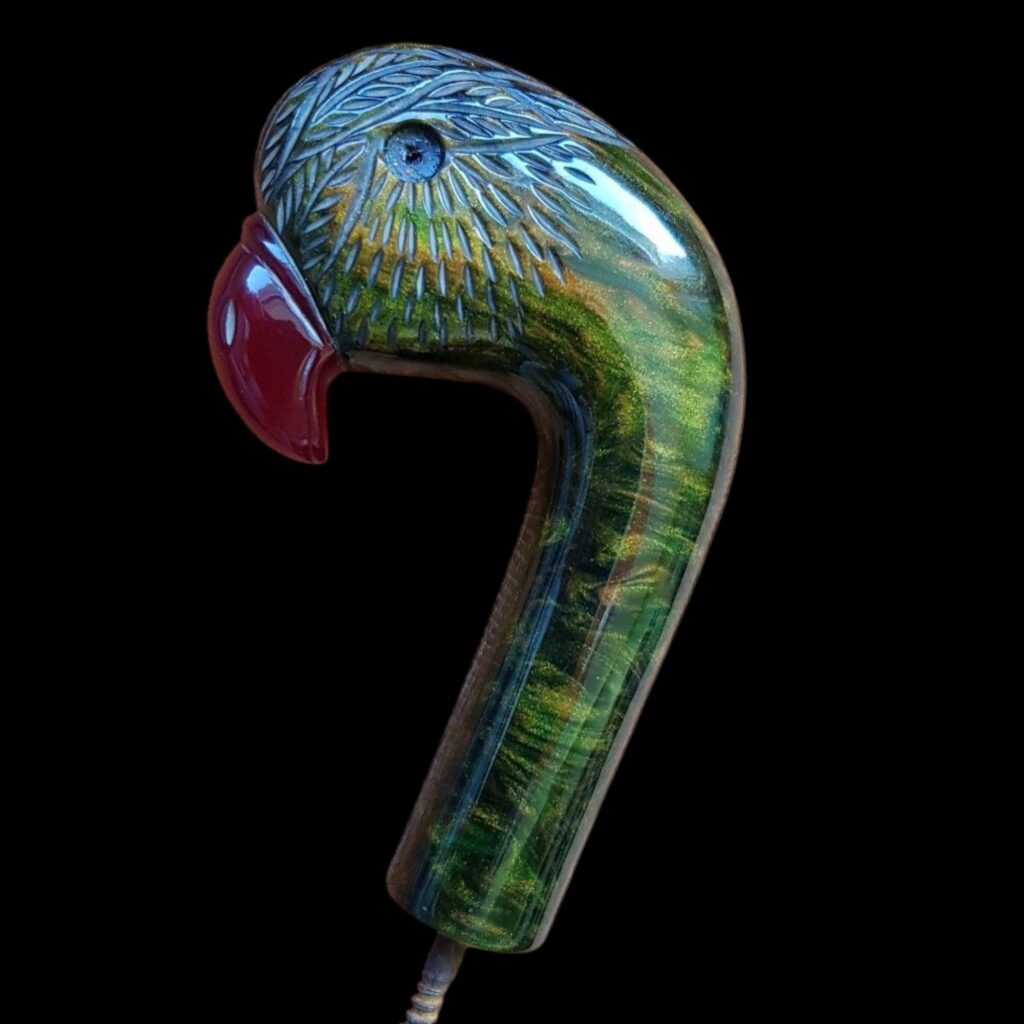
Common Uses for Cherry Amber
Historically, this specific color of phenolic resin was highly prized in the Middle East and North Africa for making prayer beads (Faturan). In Western markets, you will often find Cherry Amber used for:
- Faceted Beads: Necklaces featuring graduated, faceted beads are highly sought after.
- Cigarette Holders: The long, elegant holders popular in the 1920s.
- Umbrella Handles: Detailed, often carved handles for parasols.
Key Differences: How to Tell Them Apart
Distinguishing between general Catalin and specific Cherry Amber pieces requires a keen eye. Here is how they compare.
1. Manufacturing and Finish
Catalin was cast into tubes or rods and then sliced, carved, and polished. This means you will rarely see “seam lines” on Catalin pieces, which are common on molded plastics. Cherry Amber pieces share this trait, as they are essentially a specific color subset of cast phenolic resin. However, Cherry Amber items, particularly beads, are often faceted to catch the light, whereas standard Catalin jewelry is typically smooth or deeply carved.
2. Color and Translucency
This is the primary differentiator.
- Catalin: Can be opaque, translucent, or transparent. It comes in a rainbow of colors, often with marbling.
- Cherry Amber: Must be translucent. The color is strictly limited to deep red, wine, or dark cognac hues. If it involves swirls of other colors, it is usually classified as marbled Catalin rather than Cherry Amber.
3. Testing Methods
Since both materials are phenolic resins, they react similarly to chemical tests.
- Simichrome Polish Test: Dab a small amount of Simichrome polish on a cotton swab and rub it on an inconspicuous spot. If the swab turns yellow or brown, it is likely Bakelite/Catalin.
- Hot Water Test: Run the piece under hot tap water for 15-30 seconds. Smell it. Phenolic resin releases a distinct chemical odor similar to formaldehyde or camphor.
- Visual Inspection: Look for chips. Phenolic resin lacks the “conchoidal” (shell-like) fracture pattern of glass or natural amber.
Care and Maintenance for Vintage Plastics
Preserving these vintage pieces ensures they retain their value and beauty. Phenolic resins are durable, but they can become brittle with age.
Cleaning Best Practices
Avoid harsh chemical cleaners or soaking your pieces in water, especially if they are jewelry strung on string or silk.
- Dusting: Use a soft, dry microfiber cloth to remove surface dust.
- Polishing: For dull pieces, a small amount of metal polish (like Simichrome or Novus Plastic Polish) can restore shine. Apply gently and buff off.
- Metal Parts: If your Catalin radio or jewelry has metal hinges, be careful not to let the polish build up in the crevices.
Common Issues to Watch For
- Oxidation: As mentioned, colors change over time. If you sand or heavily polish a butterscotch Catalin piece, you might reveal the original white underneath. Many collectors prefer the vintage patina, so proceed with caution before removing oxidation.
- Crazing: Fine internal cracks can appear if the item has been stored in fluctuating temperatures. Keep your collection in a stable, room-temperature environment away from direct sunlight, which can darken the resin further.
Appreciating the Art of Phenolic Resin
Whether you are drawn to the whimsical, swirled colors of a Catalin radio or the sophisticated, glowing depth of a Cherry Amber necklace, both materials represent a fascinating era in design history. They serve as a bridge between the industrial revolution and the modern age of plastics.
By understanding the subtle differences between the broad category of Catalin and the specific niche of Cherry Amber, you can curate a collection that is not only beautiful but historically accurate. Next time you spot a glowing red bead or a brightly colored bangle at an antique show, you will know exactly what you are looking at.